The honeymoon phase
in type 1 diabetes.
A few weeks after starting insulin, many children and adults find their sugars settle and their doses keep falling. Some families start to hope the diabetes has gone. It has not. This is the honeymoon phase, and how you handle it decides how safe the next few months are. This page explains what is happening, how to spot it, what to do, and the one thing you must never do: stop insulin.
Why the sugars
settle down
In type 1 diabetes, the body's immune system attacks the beta cells of the pancreas, the cells that make insulin. By the time diabetes is diagnosed, most of these cells have stopped working, but not all of them.
At diagnosis, the cells that are left are exhausted by weeks of very high sugar. Once insulin injections start, the sugar comes down and those remaining cells get some rest. For a while they start making a little insulin again. Your own insulin and the injected insulin now work together, so less injected insulin is needed and sugars are easier to control.
Doctors call this the partial remission phase. Families call it the honeymoon phase. The immune attack has not stopped. Slowly, over months, the remaining cells are lost, and insulin needs rise again.
Signs you may be
in the honeymoon
Doses keep coming down
The doses you went home with now cause lows, and you have reduced them more than once in the first weeks or months.
More lows than before
Low readings before meals, after play, or at night, on doses that were fine earlier. This is often the first sign.
Steady readings
Sugars stay in range for long stretches, even after meals that used to send them high. CGM graphs look flatter.
A good HbA1c on a small dose
HbA1c near or below 7% while the total daily insulin is less than 0.5 units per kg per day (the ISPAD definition). Your doctor can work this out (see the calculator below).
Meal doses seem unneeded
Some meals need little or no bolus insulin, while the long-acting (basal) dose still matters.
Talk of "reversal"
Relatives, social media or a clinic say the diabetes has gone or can be reversed. In type 1 diabetes this is the honeymoon, not a cure.
Six rules for the
honeymoon months
- Never stop insulin on your own. Even a very small daily dose matters. Stopping can lead to DKA within days, especially during an illness. Many experts believe that keeping some insulin going also helps the remaining beta cells last longer.
- Reduce doses with your doctor, not by guesswork. When lows appear, doses need to come down, sometimes more than once. Send your readings on WhatsApp and we will adjust the plan. A very small dose, even 1 or 2 units, is normal at this stage.
- Check sugars as often as before, or more. Things change quickly in this phase. A CGM is very useful here because it shows night-time lows and the slow rise when the honeymoon ends.
- Keep hypo treatment with you, always. Glucose tablets or juice in the school bag, the sports kit and the car. Teach teachers and grandparents what a low looks like. Our free school care letter helps.
- Follow sick-day rules even if sugars look good. An infection can end the honeymoon suddenly and push sugars up fast. Check ketones when unwell (see DKA warning signs), and never skip basal insulin. See our sick-day quick plan.
- Use this time to learn. Carb counting, injection technique, site rotation, exercise and festival planning are all easier to learn while sugars are calm. When the honeymoon ends, you will be ready.
Download these rules as a one-page printable guide (PDF) for the fridge, the school bag or a grandparent.
Are you in the
partial remission phase?
Doctors often use a simple formula called the insulin dose adjusted HbA1c (IDAA1c): HbA1c (%) + 4 × total daily insulin (units per kg per day). A value of 9 or less suggests partial remission. This formula was developed in children and teenagers. It is less reliable in adults and in the first 3 months after diagnosis. Enter your numbers below. Nothing you type leaves this page.
The honeymoon ends.
That is expected.
The end is usually gradual. Over weeks, sugars after meals start to rise, morning readings creep up, and doses that were cut need to go up again. Sometimes it ends quickly, often with an illness or a growth spurt. Many families feel this as a setback, or worry they have done something wrong. You have not. It is the natural course of type 1 diabetes, and it happens to everyone.
- Signs it is ending: higher readings after meals, higher fasting sugar, rising HbA1c, and doses steadily going up.
- What we do: review your glucose data, raise basal and meal doses step by step, and revisit carb ratios and correction doses.
- When to come in: if sugars stay above target for several days, if ketones are positive, or if you are not sure how much to increase. Vomiting, tummy pain, drowsiness or fast breathing need urgent care at the nearest hospital.
- Thinking ahead: this is often the time families start to discuss CGM or an insulin pump. There is no hurry, and pens work well for many people.
More for families
living with type 1
What families ask us
What is the honeymoon phase in type 1 diabetes?
It is a period, usually starting within weeks of starting insulin, when the remaining insulin-making cells in the pancreas recover a little and start making some insulin again. Less injected insulin is needed and sugars are easier to control. Doctors call it the partial remission phase. It is temporary.
How long does the honeymoon phase last?
It usually lasts a few months. In some people it is only a few weeks, and in some, especially teenagers and adults, it can last a year or longer. It tends to be shorter in very young children and in those who had DKA at diagnosis.
Does the honeymoon phase mean the diabetes is going away?
No. The immune attack on the pancreas continues, and the remaining cells are slowly lost. Insulin needs will rise again. The honeymoon is not a cure, and it does not mean the diagnosis was wrong.
Can we stop insulin during the honeymoon phase?
No, not on your own. Even when the dose becomes very small, keep giving it unless your doctor tells you otherwise. Stopping insulin can lead to diabetic ketoacidosis (DKA), which can be life-threatening, especially during an illness. If doses are causing lows, contact your doctor so the dose can be reduced safely.
Why is my child having so many lows after discharge?
This is common in the first weeks. As the honeymoon starts, your child's own insulin adds to the injected insulin, so the discharge doses become too high. Treat the low first, then send the readings to your doctor so the doses can be reduced.
Can we make the honeymoon phase last longer?
Good glucose control, avoiding long periods of high sugar, and not stopping insulin are thought to help. Research into medicines that protect beta cells is ongoing, but none is routine treatment in India yet. Be careful of any product or diet that promises to extend the honeymoon or reverse type 1 diabetes.
How will I know the honeymoon phase is ending?
Sugars after meals and in the morning start to rise, HbA1c goes up, and doses need to increase again. It is usually gradual, but an illness or growth spurt can end it quickly. Share your readings with your doctor so doses can be raised step by step.
Do adults with type 1 diabetes also have a honeymoon phase?
Yes, and it is often longer in adults than in children. Adults are sometimes told they have type 2 diabetes because they need so little insulin at first. If you are an adult with a recent diabetes diagnosis and you are not overweight, or you have a family member with type 1, ask your doctor whether antibody tests (for type 1 or LADA) are needed.
References
- Mortensen HB, et al. New definition for the partial remission period in children and adolescents with type 1 diabetes. Diabetes Care 2009;32(8):1384–1390. doi:10.2337/dc08-1987
- Couper JJ, et al. ISPAD Clinical Practice Consensus Guidelines 2018: Stages of type 1 diabetes in children and adolescents. Pediatric Diabetes 2018;19(Suppl 27):20–27.
- Abdul-Rasoul M, et al. "The honeymoon phase" in children with type 1 diabetes mellitus: frequency, duration, and influential factors. Pediatric Diabetes 2006;7(2):101–107.
- Nwosu BU. Partial clinical remission of type 1 diabetes: the need for an integrated functional definition based on insulin-dose adjusted A1c and insulin sensitivity score. Frontiers in Endocrinology 2022;13:884219.
Doses falling?
Send us the readings.
If you are having lows on your discharge doses, or the sugars are starting to climb again, WhatsApp your readings or book a visit. Doses in the honeymoon months need regular, careful adjustment.
Caspian Healthcare
Opposite Post Office, Vijay Nagar Colony,
Hyderabad, Telangana 500057
Get directions on Google Maps
Asad, patient coordinator. Call or message on WhatsApp, both reach the same number.
9:00 am – 1:00 pm and 3:00 pm – 9:00 pm
Friday 3:00 pm – 9:00 pm · Sunday closed
By prior appointment only
What to bring to the first visit
- •Recent HbA1c and any lab reports
- •Current insulin doses, written down
- •Glucometer or CGM data, even a photo of the app is fine
- •Your child, if at all possible, this decision is partly theirs
- •A written list of your worries. Do not leave any of them out.
Written by your doctor
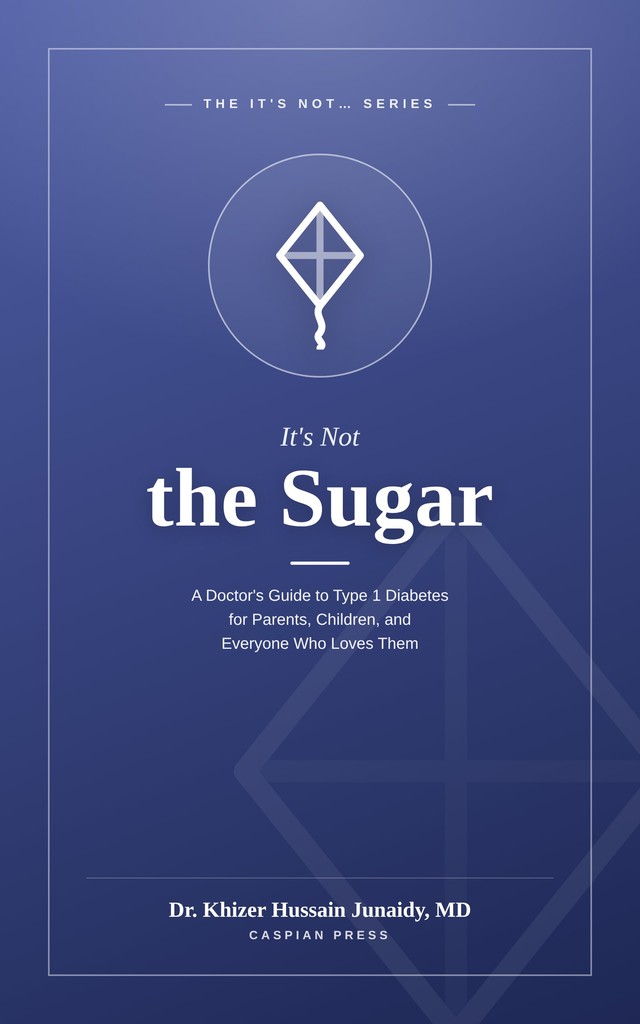
It's Not the Sugar
A Doctor's Guide to Type 1 Diabetes for Parents, Children, and Everyone Who Loves Them
Diagnosis day, insulin, carb counting the Indian way, school, sport, lows, festivals, money, and growing up with type 1.
Read it on Amazon