The C-peptide test:
what your result means.
C-peptide shows how much insulin your own pancreas is still making. It is one of the most useful tests when it is not clear whether someone has type 1 diabetes, type 2 diabetes, LADA or another type. This page explains what the test measures, how to read the result, when it can mislead, and how to prepare.
Why C-peptide tells the story
When the pancreas makes insulin, it releases an equal amount of a small protein called C-peptide. Injected insulin contains no C-peptide. So the test shows how much insulin your own body is making, even if you already inject insulin.
C-peptide also stays in the blood longer than insulin does, which makes it a steadier measure.
When the test helps
Type 1 or type 2?
When the type of diabetes is not clear from age, weight and symptoms.
Suspected LADA
An adult labelled type 2 whose sugars are getting harder to control. See LADA.
Possible MODY
Diabetes running strongly in families, diagnosed young, with low insulin needs.
Is insulin needed?
To decide whether tablets are likely to work or insulin should start.
After pancreas damage
After pancreatitis or pancreas surgery.
Low sugar without diabetes
Repeated low sugars in someone without diabetes, investigated with other tests.
How to read your number
Labs report C-peptide in ng/mL or pmol/L (1 ng/mL is about 331 pmol/L). The bands below are from the ADA and EASD consensus on type 1 diabetes in adults. They apply to a random (non-fasting) sample with sugar above 144 mg/dL, in someone who has had diabetes for more than 3 years.
| C-peptide | Roughly in ng/mL | What it suggests |
|---|---|---|
| Below 200 pmol/L | below 0.6 | Very little of your own insulin. Fits type 1 diabetes. |
| 200 to 600 pmol/L | 0.6 to 1.8 | In between. Type 1, LADA or MODY are possible. More tests help. |
| Above 600 pmol/L | above 1.8 | Your body still makes good amounts of insulin. Type 2 is more likely. |
Each lab also prints its own fasting reference range. Use your lab’s range for a fasting sample, and let your doctor interpret the result with your history.
Results can mislead if
- It is done soon after diagnosis. In the first months, and sometimes years, of type 1 diabetes the pancreas can still make some insulin. This is the honeymoon phase. A normal C-peptide then does not rule out type 1.
- Sugar was low at the time. Low sugar switches off insulin release, so C-peptide reads low. That is why sugar is tested at the same time.
- Sugar was very high for weeks. Very high sugar can temporarily tire the pancreas and lower C-peptide. It may rise again once sugar is controlled.
- The kidneys are not working well. C-peptide is cleared by the kidneys, so kidney disease can make it read high.
How to prepare
- Ask your doctor whether a fasting or a non-fasting sample is wanted. For working out the type of diabetes, a non-fasting sample taken within about 5 hours of a meal is often used.
- Make sure sugar is tested from the same sample.
- Take your usual medicines and insulin unless your doctor tells you otherwise.
- Bring a list of your medicines, and your previous sugar and HbA1c reports.
- C-peptide is often read together with antibody tests (GAD, IA-2, ZnT8). Positive antibodies point to autoimmune diabetes, that is type 1 or LADA.
More for families
living with type 1
What families ask us
What is a normal C-peptide level?
Each lab prints its own fasting reference range, so use the range on your report. For working out the type of diabetes, doctors often use a non-fasting sample: below 200 pmol/L (about 0.6 ng/mL) suggests very little of your own insulin, and above 600 pmol/L (about 1.8 ng/mL) suggests good insulin production.
Does injected insulin affect the C-peptide test?
No. Injected insulin contains no C-peptide, so the test still shows how much insulin your own body makes.
Do I need to fast for a C-peptide test?
It depends on why it is being done. For working out the type of diabetes, a non-fasting sample within about 5 hours of a meal is often preferred. Ask your doctor which one is wanted.
What does a low C-peptide mean?
It means your body is making little insulin of its own. In someone with diabetes for several years, this fits type 1 diabetes and means insulin is needed. It must be read alongside the sugar value taken at the same time.
What does a high C-peptide mean?
It usually means the body is making plenty of insulin, often because of insulin resistance, as in type 2 diabetes. Kidney disease can also raise it. Rarely, it is part of the work-up for low sugars in people without diabetes.
Can C-peptide go up again?
It can rise for a while after very high sugars are brought under control, and during the honeymoon phase of type 1 diabetes. This does not mean type 1 diabetes has gone away.
Is C-peptide alone enough to diagnose type 1 diabetes?
No. Doctors use it together with antibody tests, age, weight, symptoms and how the diabetes has behaved over time.
References
- Holt RIG, DeVries JH, Hess-Fischl A, et al. The management of type 1 diabetes in adults. A consensus report by the American Diabetes Association (ADA) and the European Association for the Study of Diabetes (EASD). Diabetes Care 2021;44(11):2589–2625.
- Jones AG, Hattersley AT. The clinical utility of C-peptide measurement in the care of patients with diabetes. Diabetic Medicine 2013;30(7):803–817.
- Buzzetti R, Tuomi T, Mauricio D, et al. Management of latent autoimmune diabetes in adults: a consensus statement from an international expert panel. Diabetes 2020;69(10):2037–2047.
Not sure which type
you have?
If you were told you have type 2 diabetes but it does not behave like it, bring your reports to a consultation. A clear answer on the type of diabetes changes the treatment.
Caspian Healthcare
Opposite Post Office, Vijay Nagar Colony,
Hyderabad, Telangana 500057
Get directions on Google Maps
Asad, patient coordinator. Call or message on WhatsApp, both reach the same number.
9:00 am – 1:00 pm and 3:00 pm – 9:00 pm
Friday 3:00 pm – 9:00 pm · Sunday closed
By prior appointment only
What to bring to the first visit
- •Recent HbA1c and any lab reports
- •Current insulin doses, written down
- •Glucometer or CGM data, even a photo of the app is fine
- •Your child, if at all possible, this decision is partly theirs
- •A written list of your worries. Do not leave any of them out.
Written by your doctor
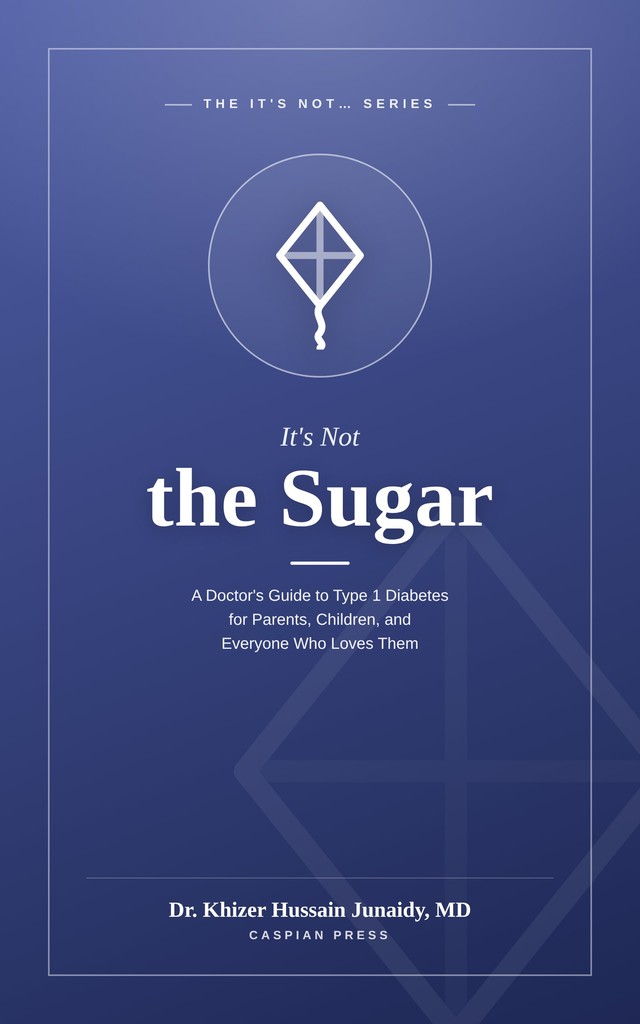
It's Not the Sugar
A Doctor's Guide to Type 1 Diabetes for Parents, Children, and Everyone Who Loves Them
Diagnosis day, insulin, carb counting the Indian way, school, sport, lows, festivals, money, and growing up with type 1.
Read it on Amazon